

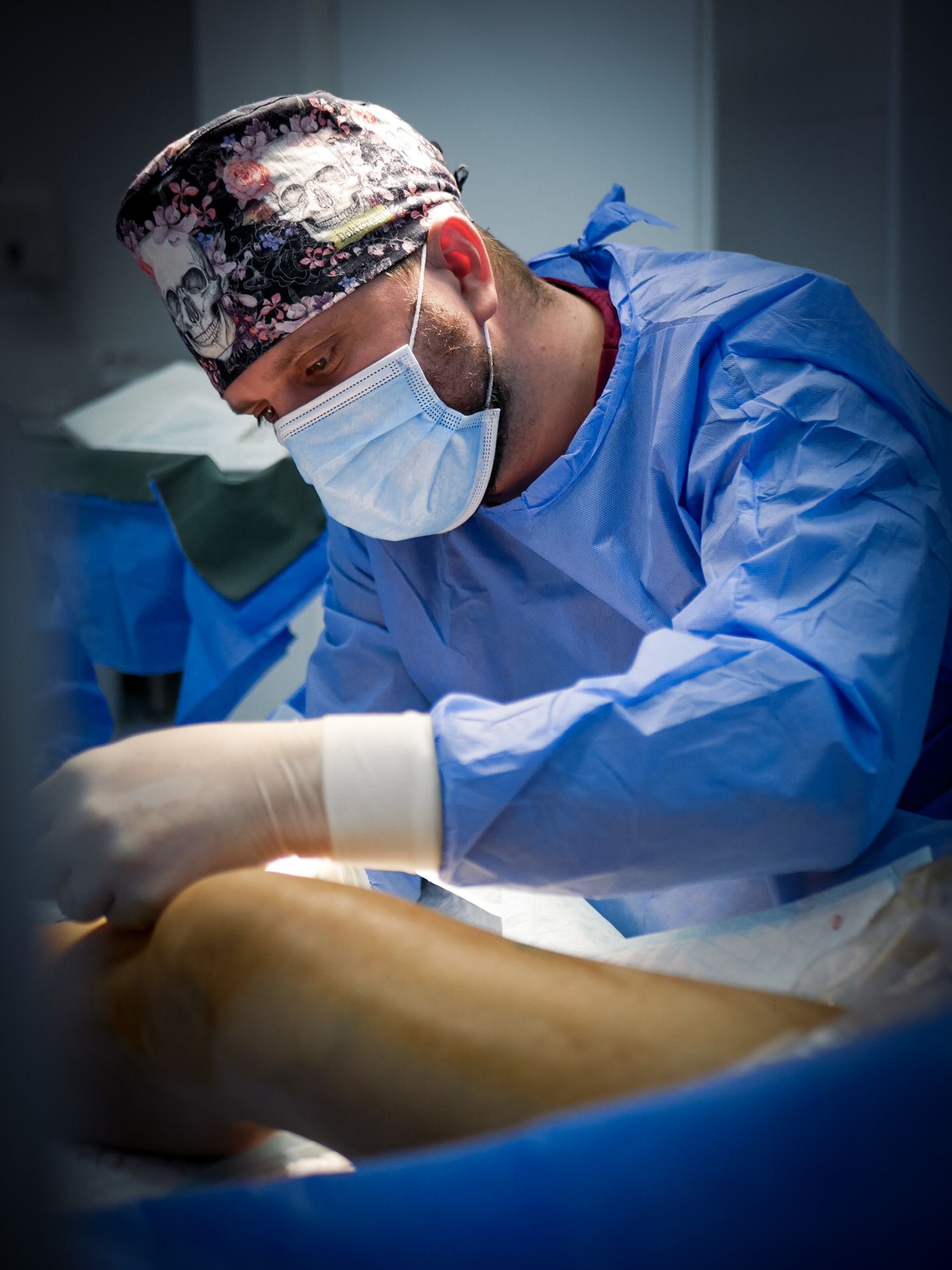
The Question Most Nigerian Patients Ask Before Anything Else
Before they ask about hospitals. Before they ask about surgeons. Before they ask about recovery.
They ask: how much?
And it is a fair question. Knee replacement surgery is not a minor procedure. It requires planning, time away from home, and a meaningful financial commitment. If you are in Lagos, Abuja, or Port Harcourt and your doctor has told you that you need a knee replacement, the first thing you probably did was look up the cost — locally, in South Africa, and increasingly, in India.
This guide gives you real numbers, not ranges so wide they are useless. It explains what the cost in India actually includes, what it does not, and what the journey from Nigeria to an Indian hospital and back home looks like in practice.
What Knee Replacement Surgery Actually Costs in India in 2026
Total knee replacement surgery in India can cost $3,500 to $9,000, compared to $15,000 to $21,000 in the UK and $49,000 in the USA. Medical Tourism Co.
For Nigerian patients specifically, here is a realistic breakdown by procedure type:
Procedure India Cost (USD) UK Cost (USD) USA Cost (USD) Total Knee Replacement (Single) $3,700 – $5,500 $15,000 – $21,000 $40,000 – $57,000 Total Knee Replacement (Both Knees) $6,500 – $9,000 $28,000 – $40,000 $80,000+ Robotic Knee Replacement $4,200 – $6,500 $18,000 – $25,000 $45,000 – $65,000 Partial Knee Replacement $3,200 – $4,500 $12,000 – $16,000 $30,000 – $45,000 Revision Knee Replacement $5,500 – $8,000 $20,000 – $30,000 $50,000 – $80,000
These are all-inclusive estimates from NABH and JCI-accredited hospitals. "All-inclusive" means the surgeon fee, anaesthesiologist, operating theatre, hospital stay, standard implant, and physiotherapy before discharge are all covered in that number. There are no hidden charges added at the billing desk.
What the Cost Includes — and What It Does Not
This is the part most guides skip, and it is where Nigerian patients get surprised.
What the India cost covers:
Surgeon's fee
Anaesthesiologist fee
Operating theatre charges
ICU stay (if required — most knee replacements do not require ICU)
Ward stay for the standard post-operative period (typically 5 to 7 days)
All medications administered during hospital admission
Standard implant (Zimmer Biomet, Stryker, or DePuy Synthes — same brands used in UK hospitals)
Pre-surgery investigations done at the hospital
Physiotherapy sessions before discharge
What it does not cover:
Your return flights from Nigeria to India
Hotel accommodation during recovery days outside the hospital
Your attendant's travel and hotel costs
Personal expenses — meals outside hospital, SIM card, transport within India
Post-discharge medications to bring home
When you are building your total budget, add approximately $800 to $1,500 for accommodation and daily expenses during recovery outside the hospital, and your actual flight costs on top of the surgical estimate.
Why Nigerian Patients Are Choosing India Over South Africa
South Africa has historically been the default destination for Nigerians who need surgery abroad. It is closer, the hospitals are familiar, and there are established Nigerian communities in Johannesburg. So why are more Nigerians now going to India instead?
Three reasons come up consistently in patient conversations.
Cost. An affordable knee surgery package in India tailored for Nigerian patients is up to 70% cheaper than Western options. South African private hospitals — Netcare, Mediclinic, Life Healthcare — charge rates that are not far behind UK pricing for international patients. A total knee replacement in Johannesburg for a Nigerian patient with no South African medical aid cover typically runs $10,000 to $16,000. The same procedure in India is $3,700 to $5,500. Tour2india4health
Implant quality. India's top hospitals use the same implant brands as South African and UK hospitals — Stryker, Zimmer Biomet, DePuy. The difference in cost does not come from lower-quality materials. It comes from India's lower operational costs — staff costs, facility overhead, administrative costs — not from cutting corners on what goes inside your knee.
Waiting time. South African private hospitals for international patients, particularly for elective procedures like knee replacement, sometimes have meaningful waiting periods. India's accredited hospitals confirm surgical dates within days of approving your case. When you have been in chronic knee pain for months or years, waiting another three months for a surgery date is not a small thing.
The Implant Question — What Goes Into Your Knee
For Nigerian patients specifically, this is one of the most important things to understand before choosing a hospital or facilitator.
The knee implant — the artificial joint that replaces your damaged knee — is the single most important component of the surgery. It determines how long the replacement lasts, how natural it feels, and how well your knee functions years after surgery.
India's top hospitals use implants from four manufacturers that are globally recognised and used in the UK's NHS, German hospitals, and top American centres:
Zimmer Biomet — one of the world's largest orthopedic implant manufacturers
Stryker — whose Mako robotic system is also used for the surgery itself
DePuy Synthes (Johnson & Johnson) — used globally for over 50 years
Smith+Nephew — known for high-performance knee systems
Your discharge documents will include the implant serial number, manufacturer name, and batch code. You can verify this independently. This matters because implant fraud — the use of counterfeit or unverified implants — is a real problem at some facilities. It is not a problem at NABH-accredited hospitals, which are audited specifically on implant procurement. Always ask for the implant documentation before and after surgery. Any legitimate hospital will provide it without hesitation.
Robotic Knee Replacement — Is It Worth Asking For?
Robotic-assisted knee replacement has become one of the most searched terms by Nigerian patients researching surgery in India — and for good reason.
The Mako robotic system, available at Apollo, Fortis, and Max hospitals, uses a CT scan of your knee taken before surgery to create a 3D surgical plan specific to your anatomy. During the operation, the surgeon controls every movement but the robotic arm provides real-time guidance that prevents deviating from the plan. The result is implant positioning that is measurably more accurate than manual surgery.
What this means practically:
The implant fits more naturally with your specific knee anatomy
Less surrounding tissue is damaged during surgery, which means less post-operative pain
Recovery is faster — most robotic knee replacement patients walk unaided within 3 to 4 days
The implant is expected to last longer because of better alignment
The cost of knee replacement in India varies with the type of implant, technique of surgery, medical history and condition, surgeon, hospital and the city where you choose to get the surgery done. Robotic surgery adds approximately $500 to $800 to the standard surgical cost at most partner hospitals — a fraction of what the same upgrade costs in the USA or UK, where robotic surgery can add $5,000 to $10,000. IndiCure
If you are under 65, physically active, and want your replacement to last 20 years or longer — ask specifically for robotic surgery when you inquire. Not every case qualifies, but a senior orthopedic surgeon can tell you within 24 hours of reviewing your MRI whether you are a candidate.
What the Journey From Nigeria to India Actually Looks Like
This is what most cost guides leave out. The numbers are one thing. The actual experience of travelling from Lagos or Abuja to Delhi or Chennai for surgery, navigating an Indian hospital, and getting home safely is another.
Here is a realistic, step-by-step picture.
Before you travel:
You share your X-rays or MRI on WhatsApp with a medical facilitator or directly with the hospital's international patient department. A senior orthopedic specialist reviews them and sends you a written treatment plan with an itemised cost estimate — typically within 24 to 48 hours. Once you agree to proceed, a hospital invitation letter is prepared for your Indian medical visa application. You apply at the Indian High Commission in Abuja or Lagos. Medical visas for Nigerian patients are typically approved in 7 to 10 working days.
Your flight:
Most Nigerian patients fly Lagos or Abuja to Dubai or Addis Ababa, then connect to Delhi, Mumbai, or Chennai depending on which hospital you are going to. Total journey time is typically 12 to 18 hours including the connection. Emirates, Ethiopian Airlines, and Air India all serve this route.
Arrival:
A coordinator meets you at the airport and takes you to your hotel or directly to the hospital depending on your surgery date. You are not navigating an Indian airport alone.
Surgery and hospital stay:
Pre-operative tests are done the day before surgery. Surgery itself takes 1.5 to 2.5 hours under spinal or general anaesthesia. Most patients wake up in a regular ward, not ICU. Physiotherapy begins within 24 hours of surgery — a physiotherapist visits your ward room and guides your first steps. Hospital stay is typically 5 to 7 days.
Recovery in India before flying home:
Most patients spend 7 to 10 days outside the hospital in a hotel close to the hospital before their surgeon clears them to fly. The coordinator handles hotel booking and hospital transport for follow-up appointments. By the time most Nigerian patients board their flight home, they are walking independently with a cane or walker, can manage stairs, and can get in and out of a vehicle without assistance.
Flying home:
Your surgeon will not clear you to fly until they are satisfied you are safe to do so — typically 12 to 16 days after surgery total. You will receive a complete discharge summary in English, a blood thinner prescription, compression stockings, and specific in-flight instructions before you leave. Deep vein thrombosis is a real risk on a long flight after joint surgery — the protocol your hospital provides manages this risk specifically.
At home:
Full recovery from knee replacement takes 3 to 6 months. The critical early phase happens in India. The rest happens with a physiotherapist in Nigeria following the protocol your Indian hospital provides. Most Nigerian physiotherapists are familiar with post-knee-replacement rehabilitation and can follow the structured programme without requiring specialist orthopedic experience.
Which Indian Hospitals Treat Nigerian Knee Replacement Patients
Nigerian patients in particular have built a strong referral network around Fortis for cardiac bypass surgery and knee replacement procedures. Arodya
The hospitals most commonly used for Nigerian knee replacement patients, based on patient volume and international department experience:
Apollo Hospitals — the most recognised Indian hospital brand in Nigeria, with information offices in Abuja and Lagos. Apollo's orthopedic department handles a large volume of African patients annually.
Fortis Memorial Research Institute, Gurgaon — particularly strong for knee replacement and cardiac procedures from Nigerian patients. JCI accredited.
Medanta — The Medicity, Gurgaon — large multi-specialty hospital with a dedicated Africa patient services programme. Strong for complex and revision knee cases.
Max Healthcare, Delhi — good option for robotic knee replacement with competitive pricing for international patients.
BLK-Max Super Speciality Hospital, Delhi — handles high volumes of international orthopedic patients including Nigerians.
The right hospital for your specific case depends on your medical history, which surgeon is most appropriate for your knee condition, and your budget. A senior orthopedic specialist reviewing your MRI will recommend the specific hospital and surgeon that makes the most sense for you — not a one-size-fits-all answer.
Questions Nigerian Patients Ask Before Booking
"I have been told I need knee replacement but I am not sure I trust that diagnosis."
This is a legitimate concern and the right instinct. Knee replacement is a significant, irreversible procedure. Getting a second opinion from a senior Indian orthopedic specialist before committing to surgery costs nothing through Manal Healthcare and takes 24 to 48 hours. Send your X-rays or MRI and the specialist will tell you honestly whether surgery is the appropriate recommendation or whether conservative treatment — physiotherapy, injections, weight management — should be tried first.
"I only have an X-ray. My hospital in Lagos could not arrange an MRI."
An X-ray gives a specialist enough information to provide a preliminary assessment and cost range. It is not enough to finalise the surgical plan. For many Nigerian patients, the MRI is arranged in India on arrival — it costs significantly less in India than in Lagos, results are available within hours, and the images are reviewed immediately by the operating surgeon. You do not need to delay inquiry until you have a full diagnostic workup.
"Can my wife travel with me?"
Yes. India's medical visa policy allows one attendant to accompany a patient on the same visa category. A spouse, parent, or adult child can travel with you at no additional visa cost. Most Nigerian patients bring a family member — the presence of someone familiar during recovery makes a meaningful difference to how the experience feels.
"What if something goes wrong after I return to Nigeria?"
Your discharge summary is formatted for any hospital in any country to understand. Your operating surgeon's contact details are included. Manal Healthcare remains reachable on WhatsApp for any post-operative question after you return. If a complication requires local treatment in Nigeria, your discharge documents give any Nigerian hospital everything they need to understand your surgery and manage the complication appropriately.
The One Thing to Do Before You Book Anything
Get your knee X-ray or MRI and send it to a specialist for review before you make any decision about which hospital, which country, or which surgeon.
The cost guides — including this one — give you a framework. But your knee, your age, your overall health, and the specific nature of the damage in your joint determine what procedure is right for you, what it will actually cost, and what your recovery will realistically look like. That assessment requires a specialist to look at your imaging.
Manal Healthcare arranges that review free of charge and responds on WhatsApp within 24 hours. You get a written treatment plan, an itemised cost estimate, a hospital recommendation, and a realistic answer to every question you have before you commit to anything.
That is the right place to start — not with a flight booking or a hospital deposit.
Manal Healthcare is a medical travel facilitator. All surgical procedures are performed by accredited hospitals and their employed surgeons. Cost estimates are indicative and confirmed in writing after specialist review of patient records.
